- Sep 5, 2025
Embracing the Mood
- David W. Shaw
- 0 comments
Join the Photo Experience!
Denali in autumn is a place of constantly changing weather. I’m not sure any of the places I regularly go, share the day to day shifts in conditions as we see in Denali National Park.
I've just returned from leading a pair back to back trips to this incredible park. On both trips, we had all manner of weather from rain, to fog, to wind, to bright sunshine and blue skies. I think the variability is one of the things I love most about Denali. Every day is different, and this is doubly true in the autumn. On the final day of my first visit this year, we had a gray and drizzly weather and on the last day of my second trip, we had snow! On both occasions, my clients and I had a few hours before the planes could fetch us, so we headed to the south end of Wonder Lake. With road access closed down in the western half of the Park Road, this once bustling part of the park seems strangely post-human. The campsites are overgrown, the bus stop and bulletin board are falling into disrepair. But the nesting loons of have paid the absence of people no mind, and dive with their chicks in the deeper water of the lake.
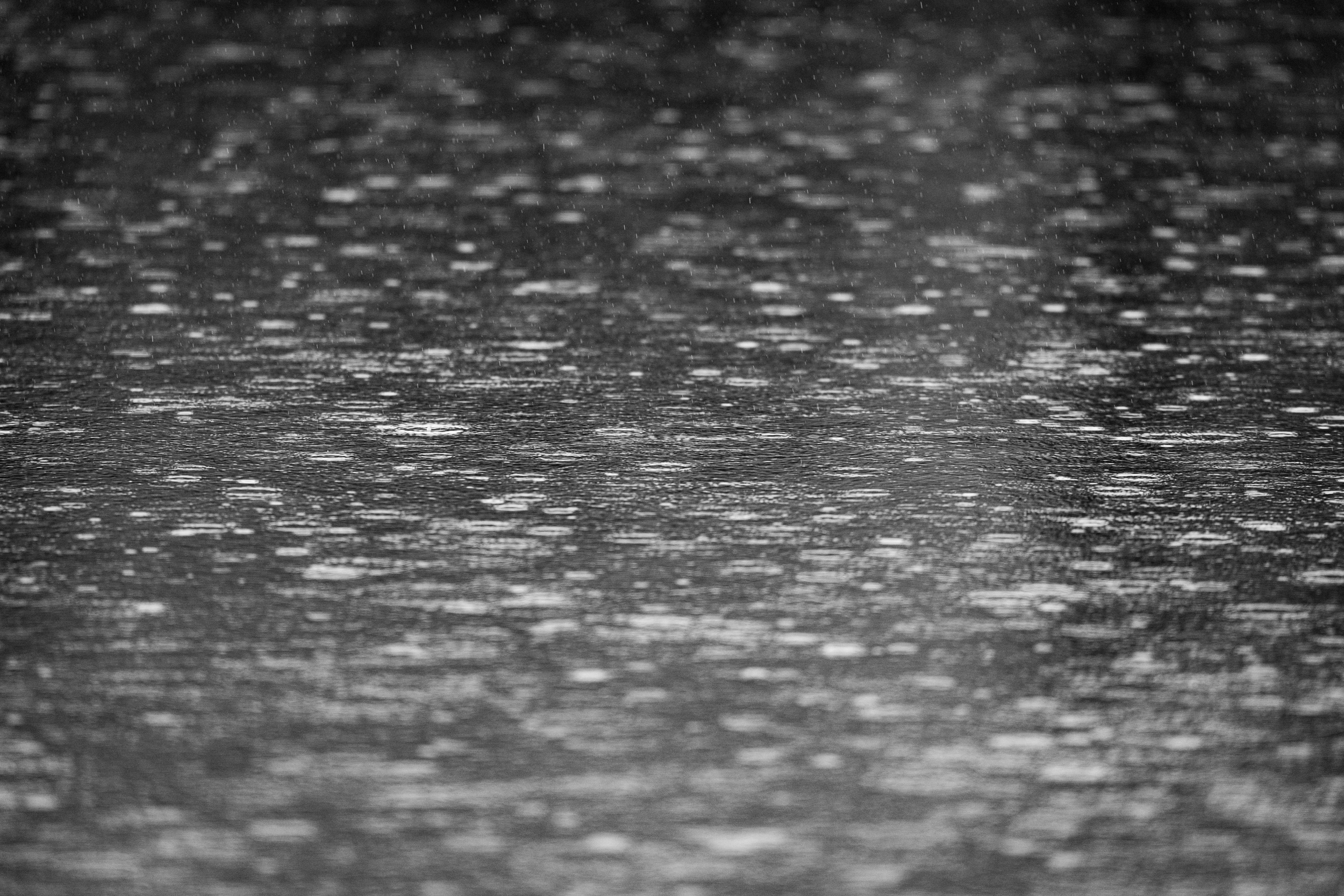
The first visit was gray and foggy, the smooth water of the lake dappled by rings of raindrops, the fog repeatedly settling over the water and then lifting to show the the distant shore of the lake.
While hardly the classic view of Denali, this type of weather is common, particularly in the fall, and another mood of the park. Gray conditions thrive in black and white, after all, even color shots are dominated by shades of gray. Sometimes it’s hard to tell the difference between the color and the black and white versions of the same image.
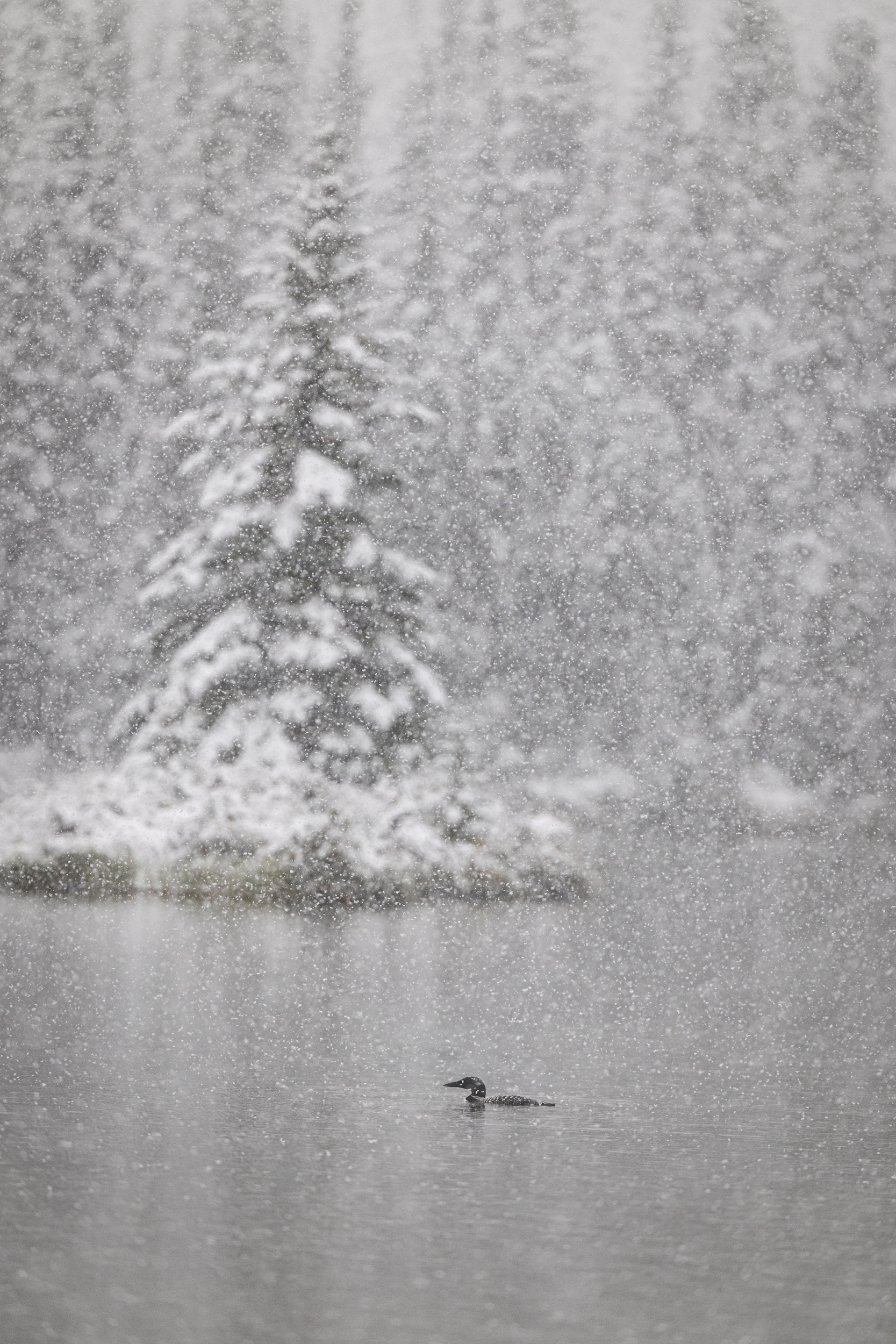
On the second trip, we had almost exactly the same thing happen again. We woke on departure day to rain, which changed to snow. Our flights, delayed until the weather cleared in the afternoon, gave us a window to wander again down to the south side of the lake. But instead of light rain, we had heavy, wet snow falling on the gray water.
Autumn snow or rain the shooting conditions are essentially the same.
Technical Considerations
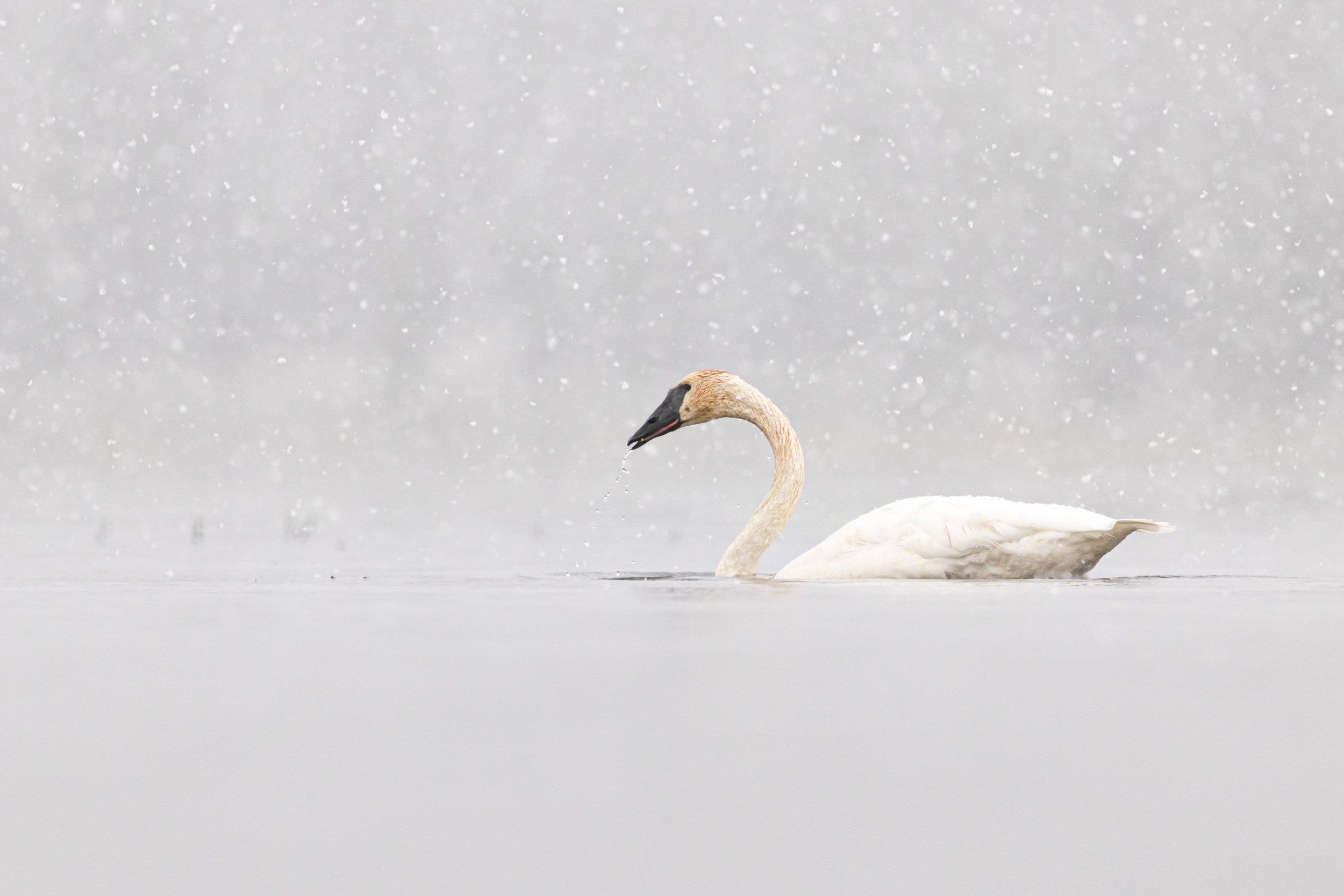
Though the light often appears very dim, this can be misleading to the photographer. Like a snowy landscape, there is a lot of reflected light, that will fool your camera into underexposing scene. The old adage “add light to white” applies in moody fog and rain just as much as it does to snowy landscapes. Typically, I will add a stop of light to images in these conditions. This image of a Trumpeter Swan is a perfect example. The heavy snowfall and white swan tricked my camera into under-exposing the shot. Even after I added a stop of light in camera, I still needed to boost the exposure in post-processing.
Shutter speeds can vary depending on your goals for the image. Large flakes of falling snow, may look compelling with slow shutter speeds, while details in the raindrops falling on water will require something much faster. Consider your intent and decide.
Apertures too will depend on your intent. The depth of field you choose will play a big role in the outcome of any photo, and moody conditions are no different. In the images of raindrops (top of post), on the water, I opted for a shallow depth of field, looking to provide a sense that the water extended to infinity before and behind the focus plane.
Thoughts on Composition
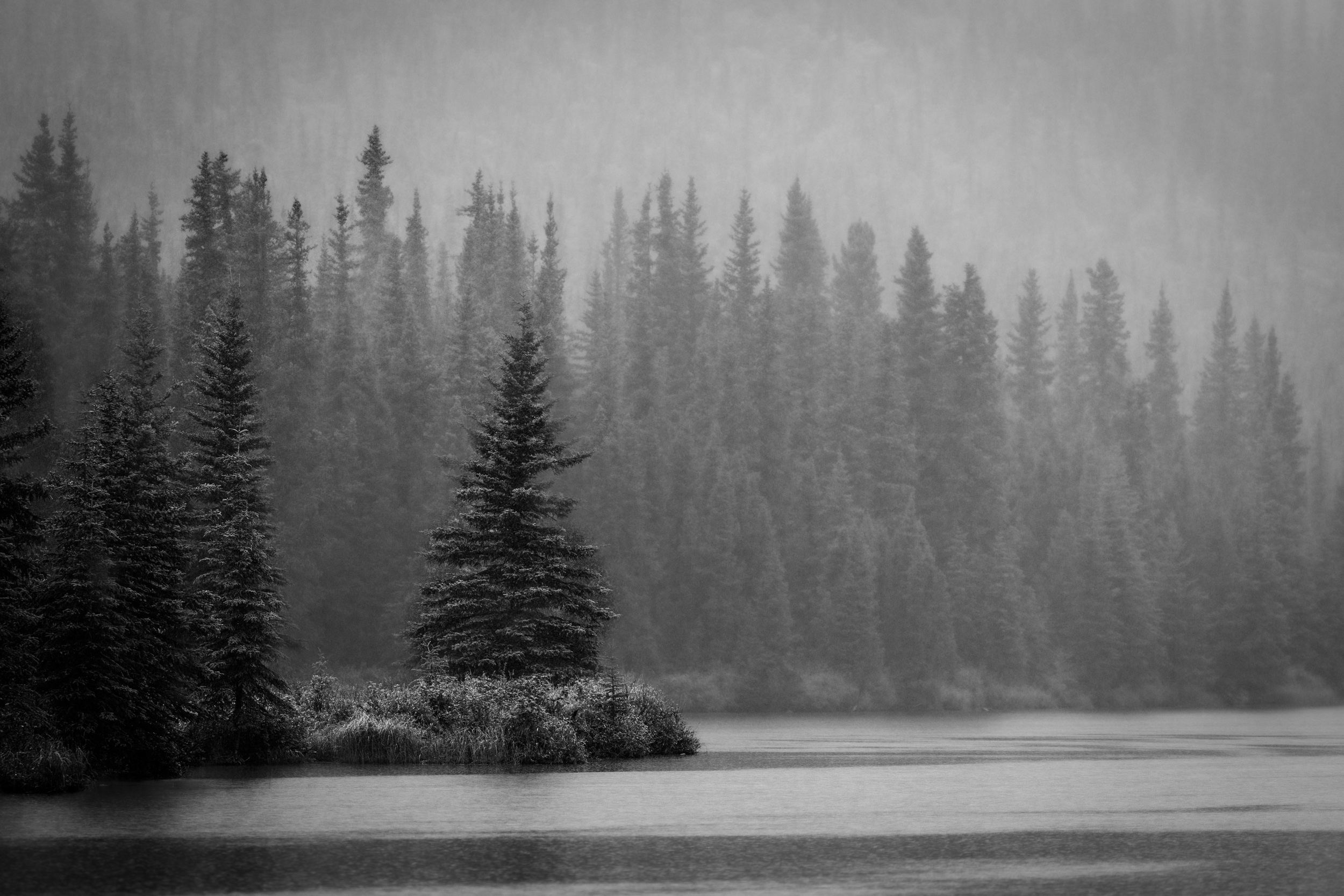
Depth really matters in these conditions. Indeed, images are almost entirely about depth. The fog, mist, rain, and snow means that even elements that aren't far away may be muted or blurred by the conditions. In this image, the foreground trees were reasonably crisp, but the forest beyond was blurred by the mist. I wanted the rain to be a part of this story, so I used a telephoto, zoomed in on the closest trees, and used a shallow depth of field to make the background even more blurred.
In the image of the loon in the falling snow, I used an almost identical technique, focusing on the loon, and letting the background blur as much as possible.
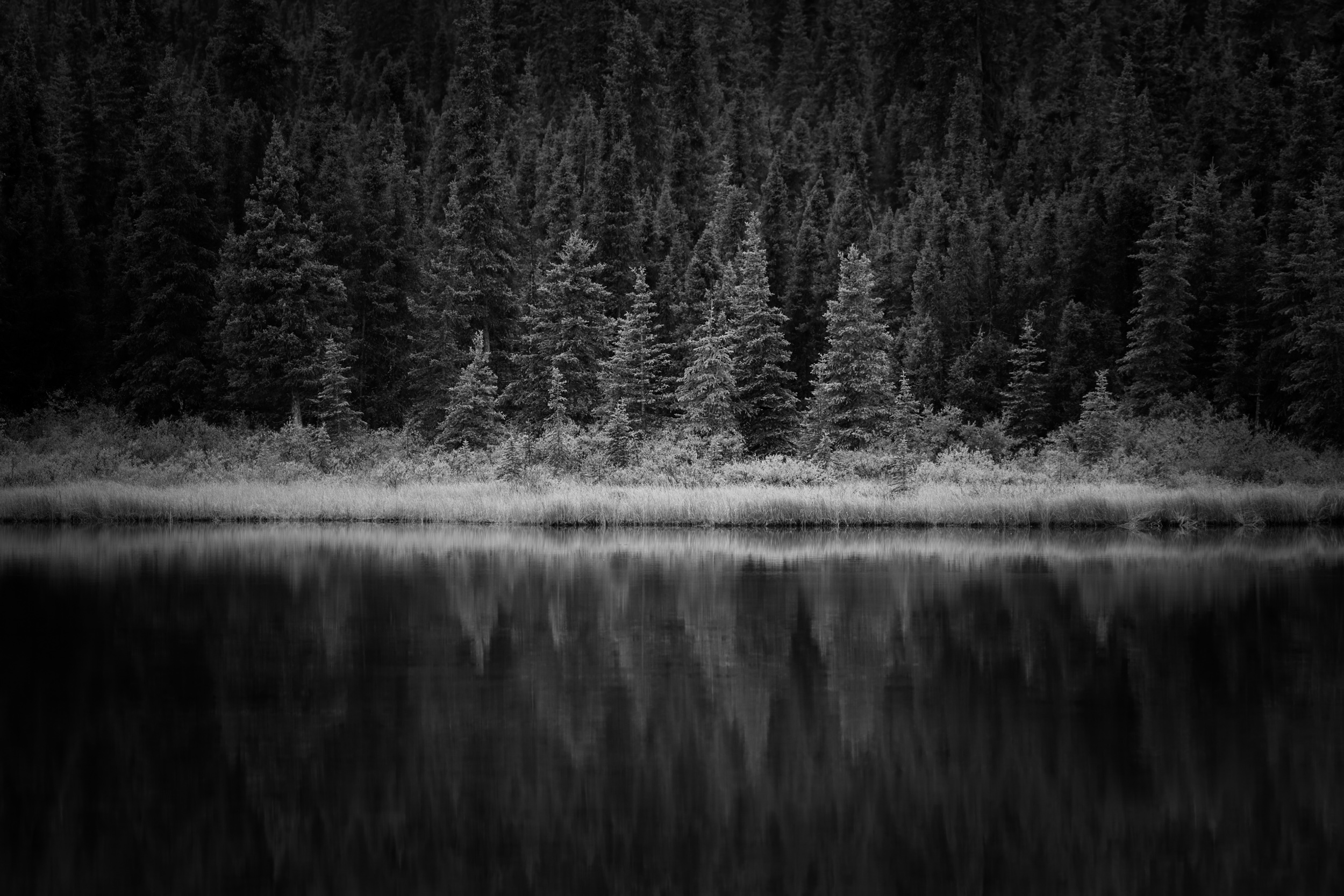
When the rain or snow wasn't falling heavily, things crisped up. This provided an opportunity to work with reflections. The image of the spruce trees on the shore of the lake is actually one of my favorite images from the first trip. I love the mirror-like composition, and crisp central trees fading to dark forest around the edges.
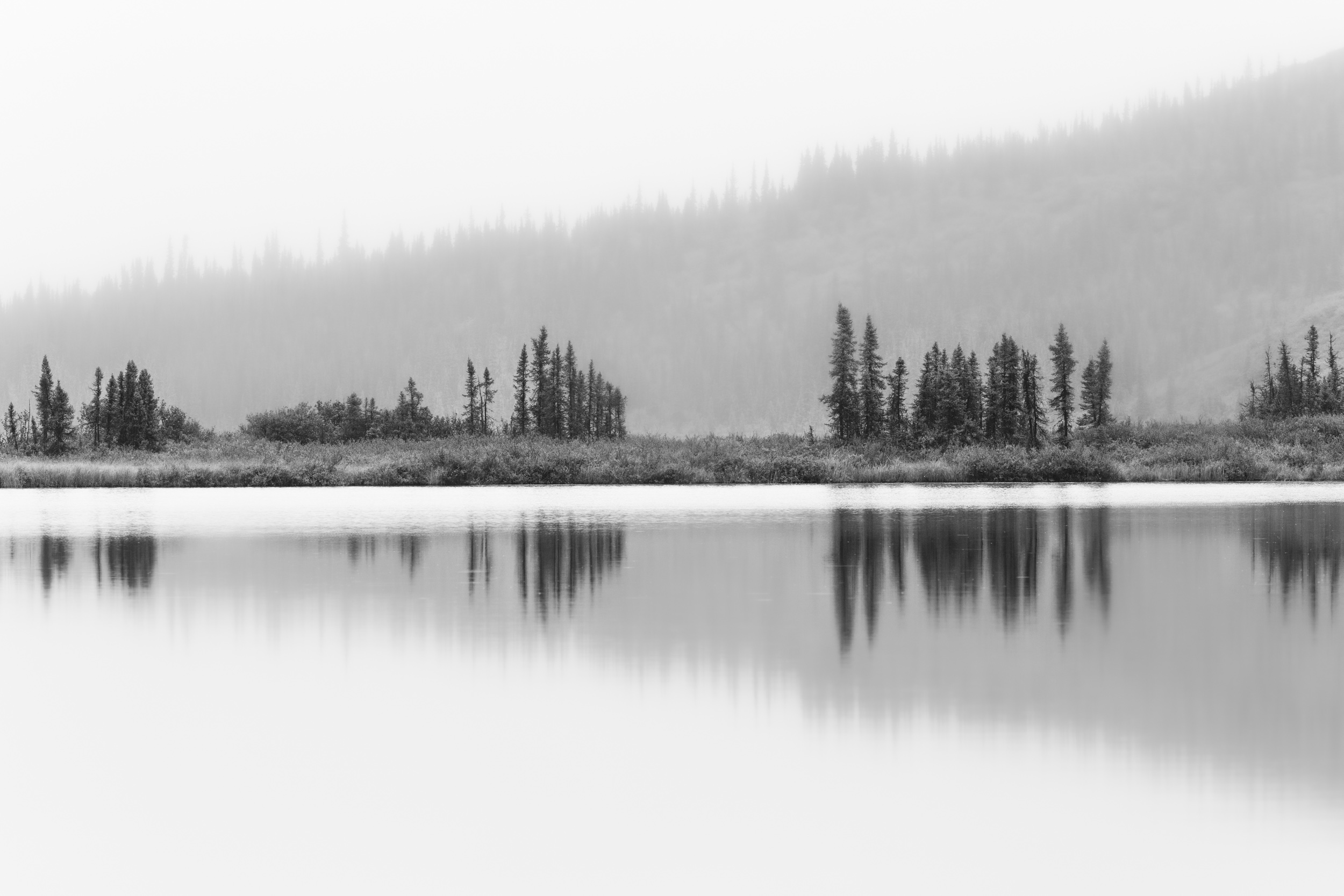
The second photo shows a more distant shoreline, reflected nearly perfectly. Hey, if you've got reflections like this, use them!
Concluding Thoughts
In fog, mist, snow, and rain, you have no hope of capturing the grand landscapes of a place like Denali National Park, but you can still create images that matter. I've photographed Denali many times, and often look forward to these kinds of conditions because they provide the opportunity to create something new. Just don't forget your raingear!