- Nov 1, 2025
Shoot for Variety
- David W. Shaw
- 0 comments
Join the Photo Experience!
I've recently returned from leading my "Jaguars of the Pantanal" workshop. As expected, the Pantanal portion was exceptional - jaguars, ocelots, coatis, caimain, and abundant birds. Afterward, a cohort of my group and I spent a few days in the Atlantic Rainforest. Brazil's "Mata Atlantica" is one of the world's great biodiversity hotspots, and home to extremely high numbers of endemic species (species that occur no where else).
During the extension, we spent the bulk of our time looking for and shooting birds. We camped out for the better part of a morning with pair of Atlantic Royal Flycatchers in Caverna do Diabos State Park. There, the birds were regularly using just a few different perches. It would have been easy to just sit in one spot and snap photos as the birds landed on a nearby perch. But the photos would likely all look very similar.
This is a common problem among photographers - as we try to get that one photo we've envisioned, we forget to go for variety, instead filling our cards with hundreds of nearly identical photos. When I see this happening on my trips, I encourage my clients to move around, find a different perspective, use the fore and background elements, and wait for interesting or distinctive postures and behavior.
Here are a series of images of the Royal Flycatcher. They are all the same bird, perching in the same spot, but made from different perspectives, and using different elements around me.
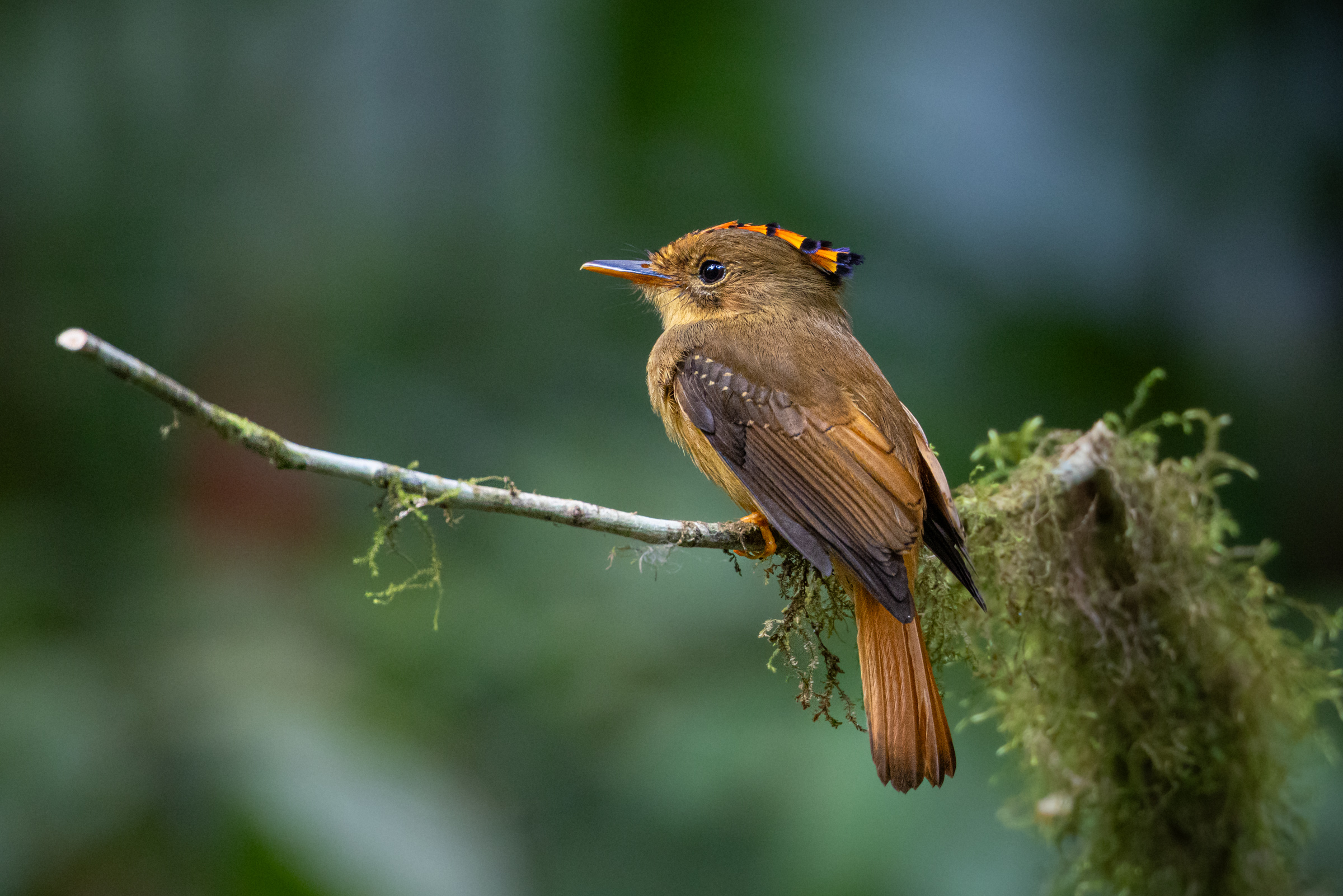
Above, is the classic bird portrait, and in this case, showing a bit of the distinctive crest of the Royal Flycatcher. Clean background, sharp subject. It's a solid photo.
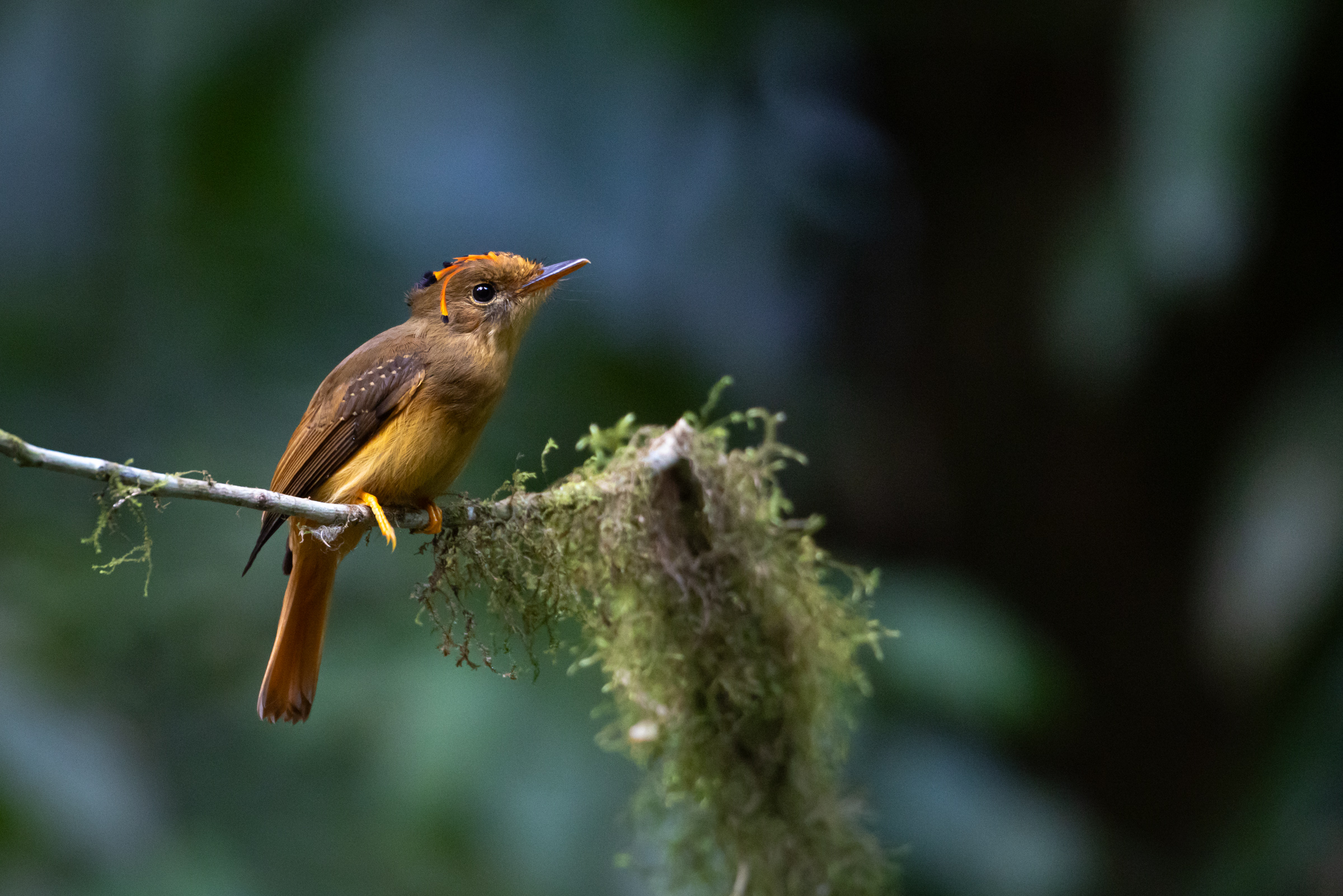
Here is a slightly different take on the same classic composition. In this case, the bird had just finished scratching its head leaving one colorful plume of it's crest, draped behind the eye.
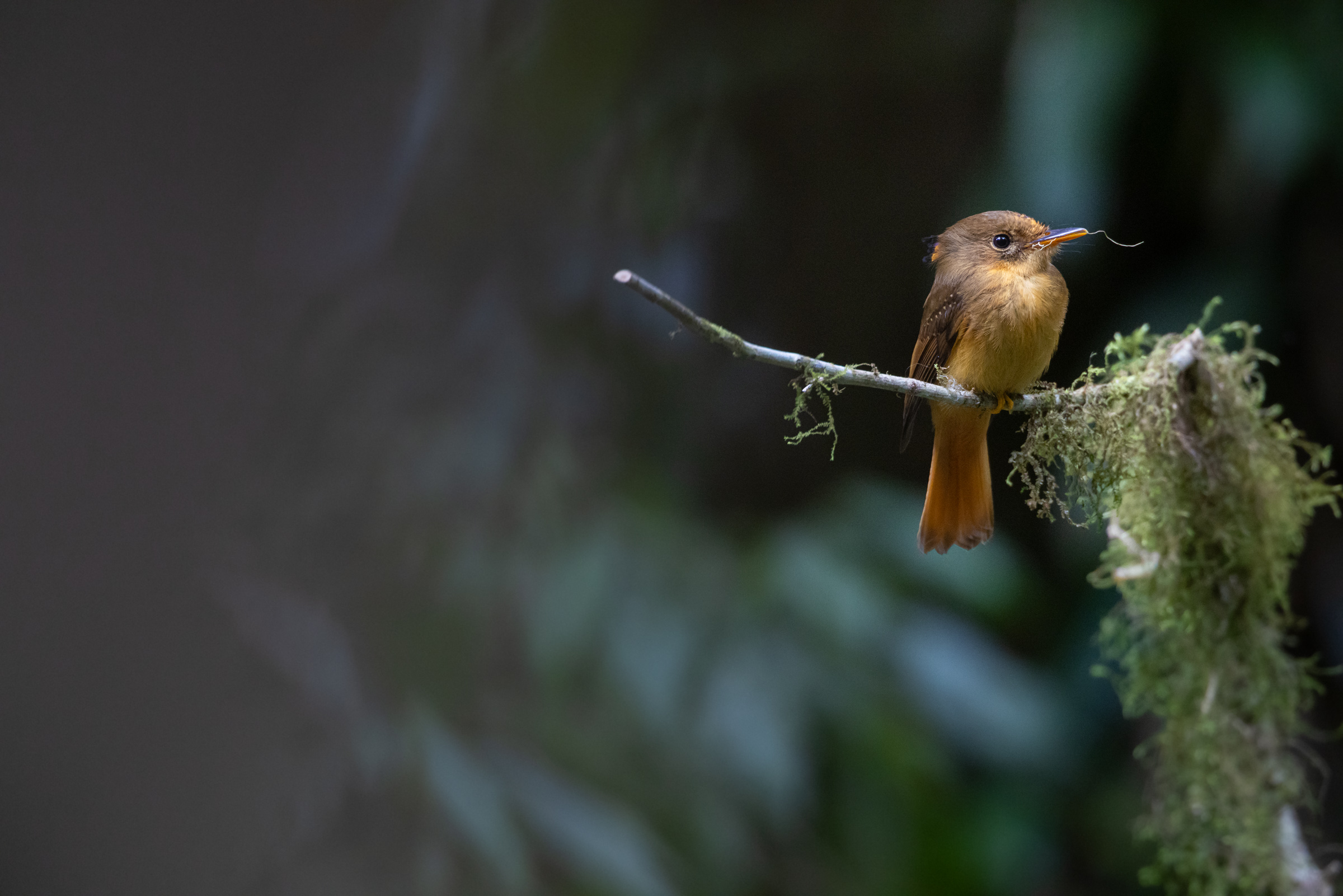
Here, I took things a step further. First, the bird is holding nesting materials, a small strand of moss, ready to line its under-construction nest. That's a good behavior to catch, but just as importantly, I used the trunk of a tree on the left to create a blur blocking most of the left side of the frame. The tree was very close to me, so I just eased my lens in along behind it until it created a gray blur to dominate the left.
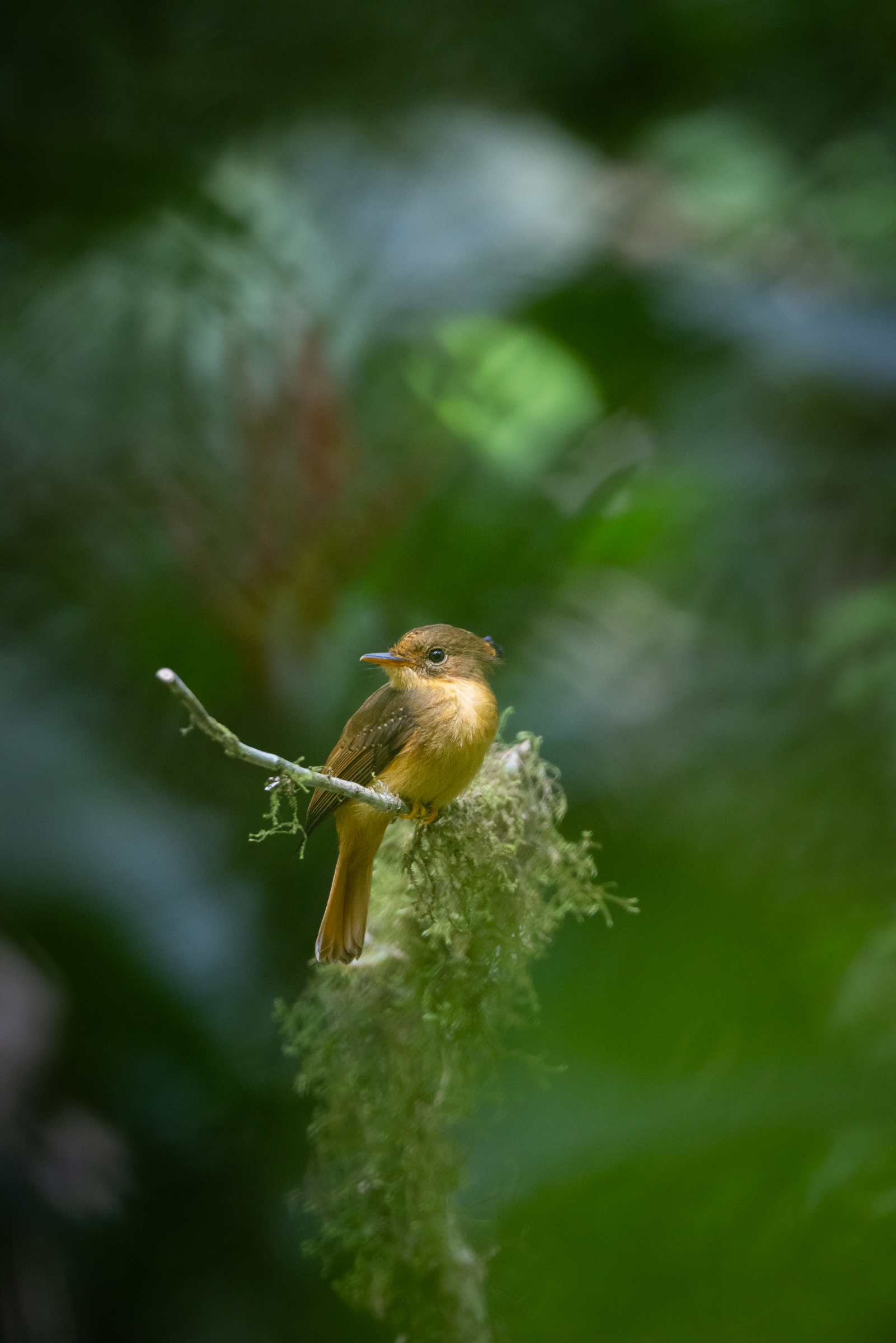
Finally, there is this image, where I took the use of foreground vegetation to another level. I found a small gap in some foliage and framed the bird through it, leaving behind a wash of green that almost completely surrounds the bird. Too, in the background was a blooming Heliconia, which I put above to the left of the bird, adding just a hit of red to the scene.
Which image is best? Well that's up the viewer, but the important thing here is the variety. Not every photo I took during the hours we spent with these birds are the same, and that IS important.
It doesn't have to take hours, either. This next set of a Saffron Toucanet were taken within a moments of one another, as the bird climbed into its nest cavity and then poked it's head out. Perhaps 30 seconds elapsed during the whole series. But I zoomed in and out, and took advantage of the scene as much as I could in the limited time I had.
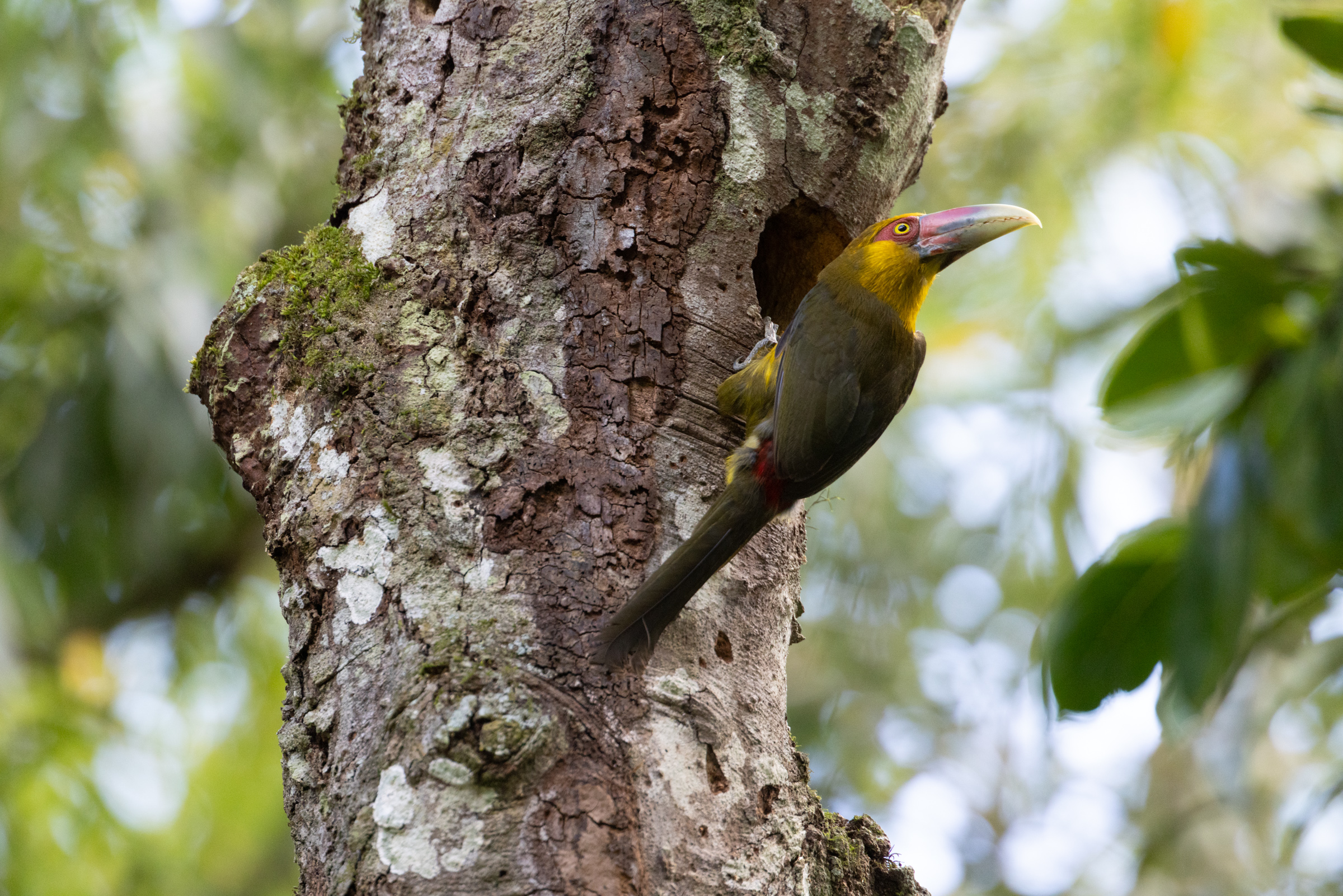
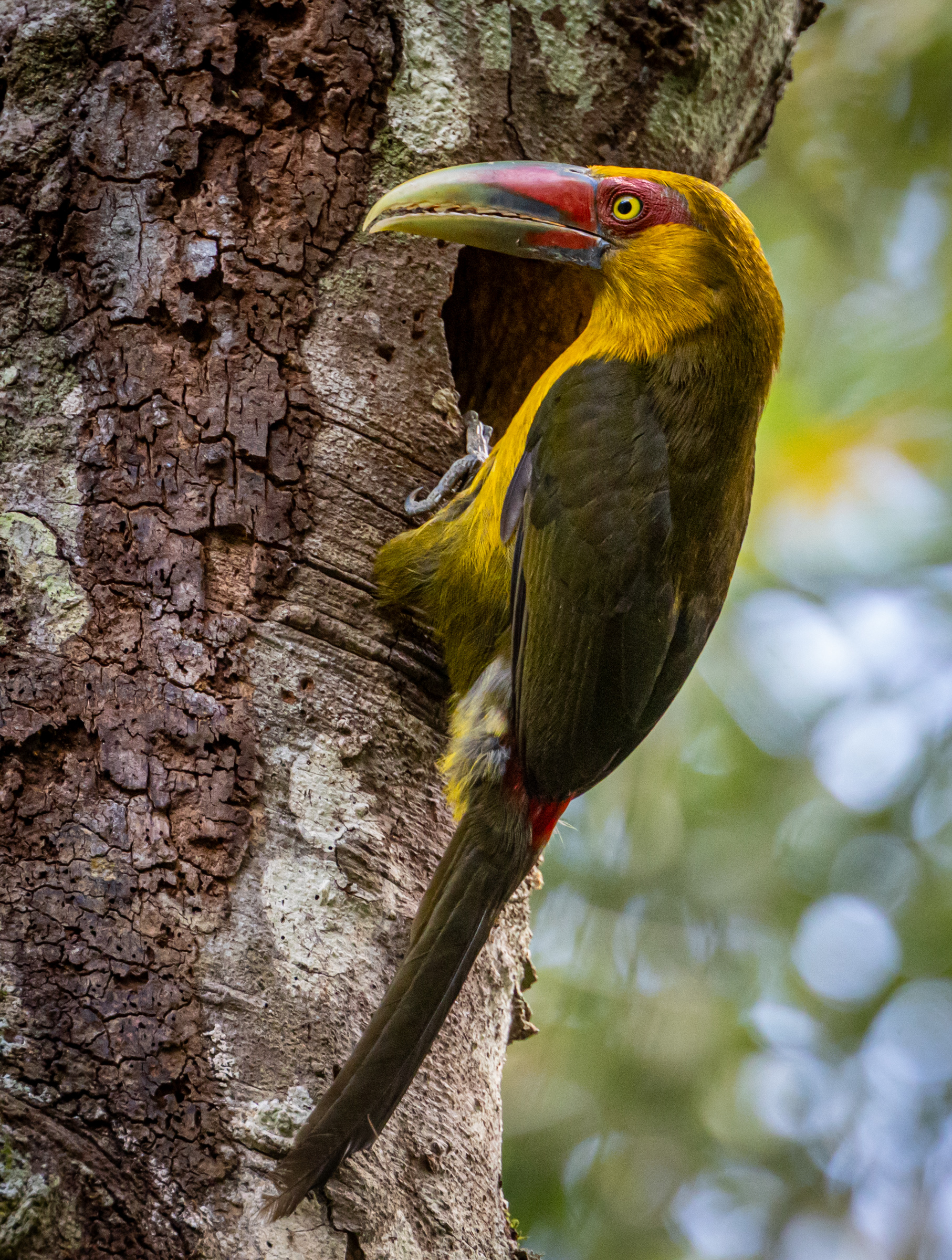
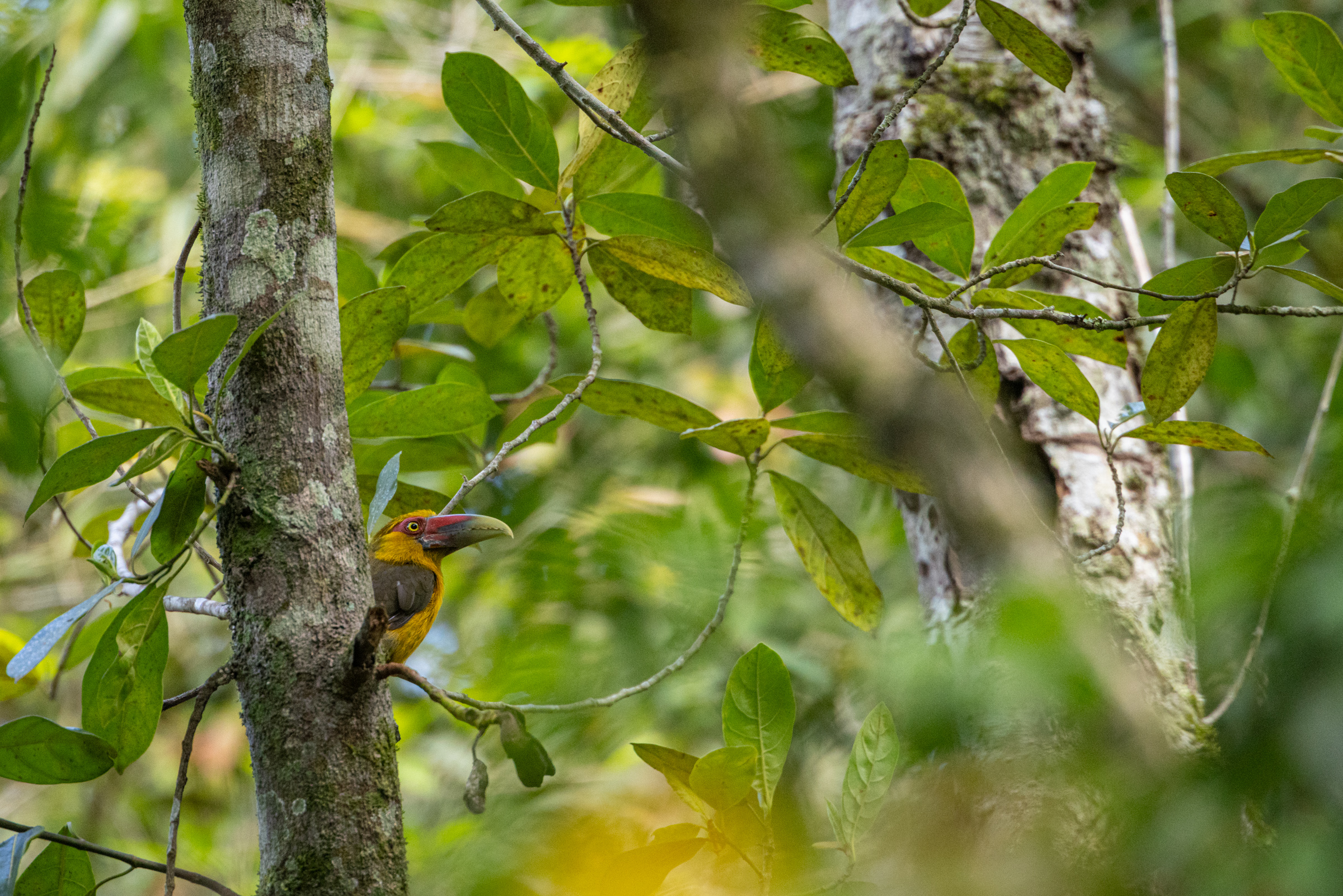
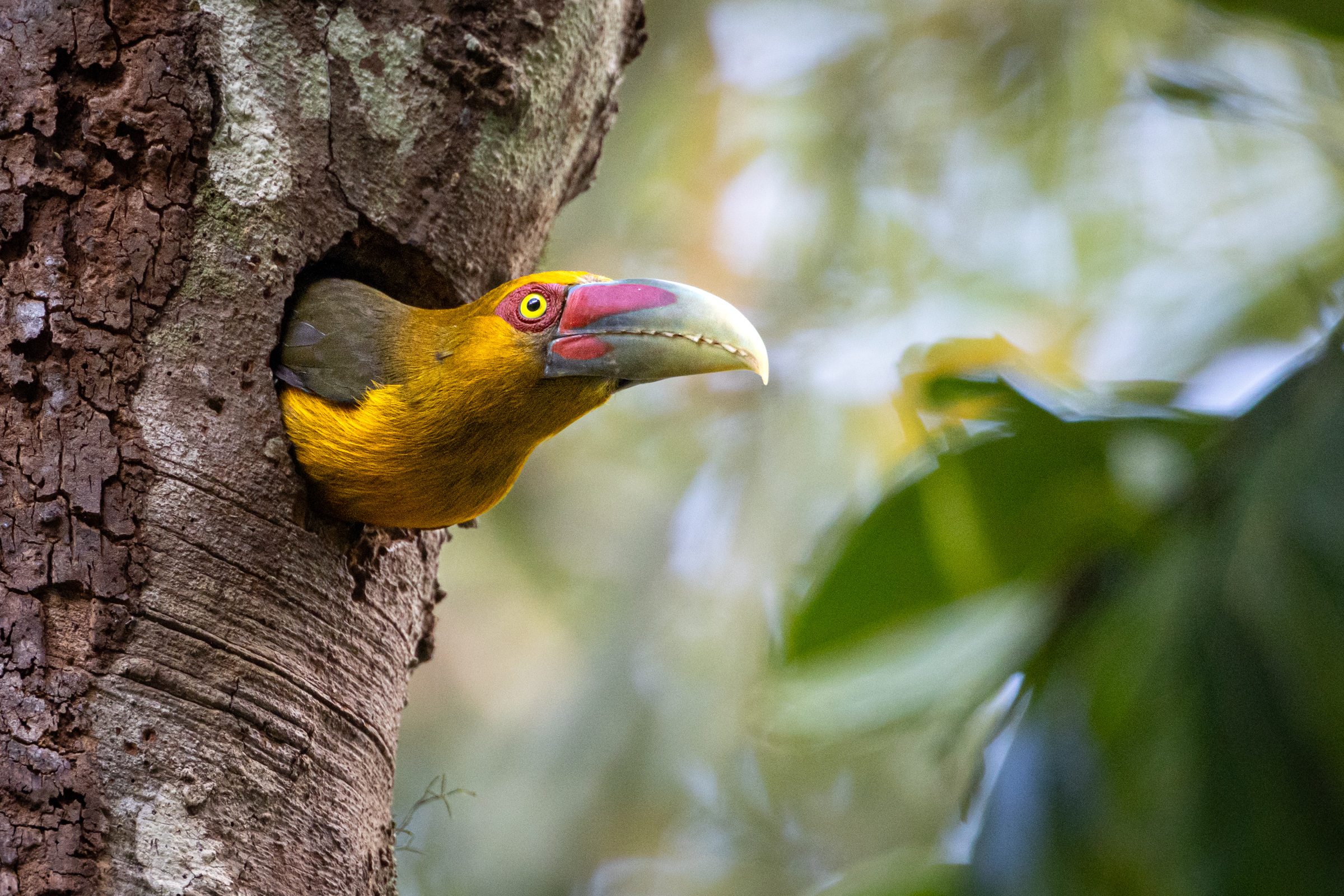
When things are moving quickly in the field, we rarely have the opportunity to consider what is really best, which image will really work. But when you shoot for variety, you'll maximize your odds of getting just the photo you want.
And one other note - if you, like me, hope to sell the photos you create, or as I often do, use them to accompany articles for magazines, then variety will really help you. As editors are laying out a spread for publication, they need different photos. If every image is a clean, tight portrait there is little space for text or insets. I've found that editors will often choose an image that fits their layout needs, over what I thought was a "better" frame.
By shooting for variety, you'll maximize your odds of creating what you need, and what your audience wants.